
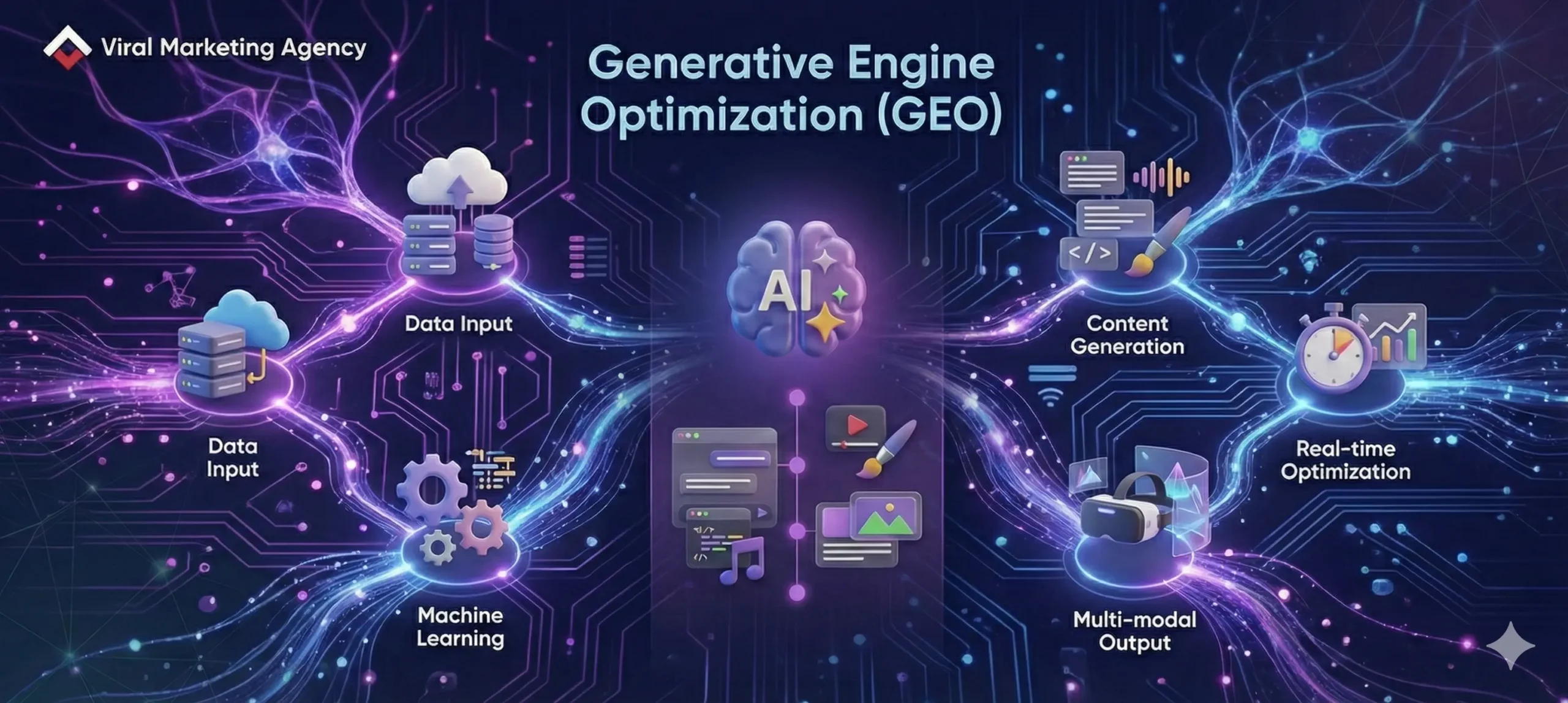
Introduction: Search Is No Longer Just About Google Rankings
For years, digital marketing revolved around one question:
“How do I rank higher on Google?”
Today, the question has changed.
People are no longer searching only on Google. They are asking questions directly to AI tools like ChatGPT, Gemini, Copilot, and generative search experiences. These platforms don’t show ten blue links; they generate answers.
This shift has given rise to a new concept:
Generative Engine Optimization (GEO).
If your brand or content is not optimized for AI-generated answers, you risk becoming invisible in the next phase of search, even if your SEO is strong.
This guide explains GEO in simple language and shows how businesses, professionals, and beginners can prepare for AI-driven visibility.
What Is Generative Engine Optimization (GEO)?
Generative Engine Optimization (GEO) is the process of optimizing your content, brand, and online presence so that AI-powered search engines and tools can understand, trust, and reference your information when generating answers.
The goal of GEO is not just clicks or rankings.
👉 The goal is to become a trusted source for AI-generated responses.
Related: Zero-Click Searches
How GEO Is Different from Traditional SEO
Traditional SEO focuses on:
- Keywords
- Rankings
- Clicks
- Search engine result pages
GEO focuses on:
- Authority
- Context
- Trust
- Entity recognition
- AI comprehension
AI tools do not rank pages the same way Google does. They analyze patterns, credibility, topical depth, and consistency across the web.
That’s why GEO requires a slightly different mindset.
Why Generative Engine Optimization Matters Today
AI-driven search is growing fast, and user behavior is changing.
Here’s why GEO is becoming critical:
1. Users Are Asking AI Instead of Searching
Many users now ask questions like:
- “How can I grow my business online?”
- “Explain SEO in simple terms”
- “Best marketing strategies for small businesses”
They expect complete answers, not links.
2. AI Generates Answers, Not Search Results
AI tools:
- Summarize information
- Combine insights from multiple sources
- Reference trusted brands and experts
- Skip low-quality or shallow content
If your content lacks authority, it won’t be used.
3. Visibility Without Clicks Is the New Normal
Even when AI uses your ideas, users may never visit your website.
That makes brand authority and recognition more important than raw traffic.
How Generative Engines Decide What to Trust
AI tools rely on multiple signals to decide which content to use.
Some key factors include:
- Depth of content
- Accuracy and clarity
- Expertise signals
- Brand consistency
- Mentions across the web
- Topical authority
- Clean structure and formatting
Simply publishing content is no longer enough. It must be useful, reliable, and well-structured.
Real-World Example of GEO
Example: Traditional SEO vs GEO
Traditional SEO search:
“Best ways to improve website traffic”
SEO helps your blog rank and attract clicks.
AI query:
“How can a small business increase website traffic?”
AI generates a detailed answer by analyzing trusted sources.
If your content:
- Explains concepts clearly
- Covers the topic in depth
- Shows expertise
- Is referenced or mentioned elsewhere
AI may use your insights to shape its response.
That is GEO at work.
Core Elements of Generative Engine Optimization
To succeed with GEO, focus on these foundational elements:
1. Topical Authority (Not Just Keywords)
AI prefers sources that deeply cover a topic, not those that publish surface-level articles.
Instead of writing:
- One blog on SEO
Build:
- SEO basics
- Technical SEO
- Local SEO
- SEO vs AEO vs GEO
- SEO strategies for businesses
This signals expertise and credibility.
2. Clear, Structured, Human-Readable Content
AI understands content better when it is:
- Well-organized
- Logically structured
- Clearly explained
- Easy to scan
Use:
- Proper H1, H2, H3 headings
- Short paragraphs
- Bullet points
- Clear definitions
Avoid vague or overly promotional language.
3. Strong Brand & Entity Signals
AI tools recognize brands as entities.
To strengthen entity recognition:
- Use consistent brand name everywhere
- Maintain accurate business information
- Have a strong About page
- Build mentions on other websites
- Maintain active online presence
The more consistent your brand appears, the easier it is for AI to trust it.
4. Experience, Expertise, Authority & Trust (E-E-A-T)
GEO heavily relies on Google’s E-E-A-T principles.
Your content should show:
- Experience: Practical insights, real explanations
- Expertise: Clear understanding of the topic
- Authority: Recognition or mentions from others
- Trust: Accurate, honest, updated information
AI engines favor content that feels written by real experts, not generic writers.
5. Contextual Depth Over Word Count
GEO is not about writing longer content.
It’s about writing complete content.
Cover:
- What
- Why
- How
- When
- Who it’s for
Common mistakes
Practical use cases
This gives AI enough context to rely on your content.
GEO vs SEO vs AEO: Where GEO Fits
| Aspect | SEO | AEO | GEO |
|---|---|---|---|
| Focus | Rankings | Direct answers | AI-generated answers |
| Platform | Search engines | Snippets & voice | AI tools |
| Goal | Traffic | Visibility | Authority |
| Content | Keyword-focused | Question-focused | Context-focused |
GEO does not replace SEO or AEO.
It builds on top of them.
Related: SEO vs AEO vs GEO
Actionable GEO Strategies for Businesses & Professionals
1. Create Authority-Driven Content
Write content that:
- Educates deeply
- Solves real problems
- Avoids fluff
- Adds original insight
AI prefers content that genuinely helps users.
2. Build Topic Clusters
Instead of random blogs, create structured clusters:
- One main pillar topic
- Multiple supporting articles
- Internal linking between them
- This helps AI understand your expertise.
3. Answer Real User Questions
Use:
- FAQs
- Question-based headings
- Conversational explanations
This improves AI comprehension and reuse.
4. Strengthen Off-Site Presence
AI trusts brands that are mentioned elsewhere.
Focus on:
- Guest posting
- Citations
- Industry mentions
- Community participation
Your authority shouldn’t exist only on your website.
5. Keep Content Updated
Outdated content reduces trust.
Regularly:
- Update facts
- Refresh examples
- Improve clarity
- Add new insights
AI tools prefer current and relevant information.
Common GEO Mistakes to Avoid
- Writing shallow content
- Over-optimizing keywords
- Ignoring brand building
- Publishing duplicate ideas
- Using vague or generic language
- Chasing traffic instead of authority
GEO rewards quality, not volume.
The Future of Generative Engine Optimization
Search is moving toward:
- AI-first experiences
- Conversational discovery
- Answer-based consumption
- Entity-driven trust systems
In the future:
- Brands will compete for trust, not just rankings
- Visibility will happen inside AI answers
- Authority will matter more than clicks
GEO is not a trend. It’s a long-term shift.
Final Thoughts: Why GEO Is a Long-Term Advantage
Generative Engine Optimization is about positioning your brand where decisions begin inside AI-generated answers.
If SEO helped businesses get discovered, GEO helps businesses get remembered and trusted.
By focusing on authority, clarity, and usefulness, you don’t just adapt to AI-driven search, you benefit from it.
Those who invest early in GEO will lead the next phase of digital visibility.
Frequently Asked Questions (FAQ)
Is Generative Engine Optimization replacing SEO?
No. GEO complements SEO. SEO builds visibility, GEO builds authority within AI systems.
Do small businesses need GEO?
Yes. AI tools are used by individuals and decision-makers at all levels.
Can blogs help with GEO?
Yes. Well-structured, authoritative blogs are one of the strongest GEO assets.
Is GEO only for AI tools like ChatGPT?
No. GEO also supports Google’s generative search and future AI-driven platforms.